
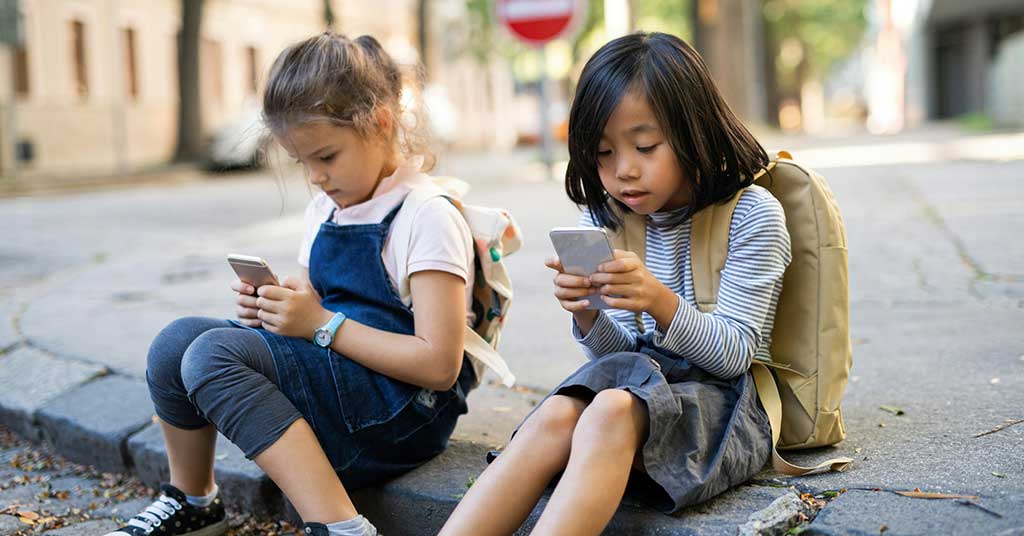
Social media companies failed to protect our children, so governments are right to impose limits
Governments are finally waking up to the damage social media is inflicting on children.
After years of failed self-regulation, policymakers are acknowledging that digital platforms are not neutral tools but powerful systems shaping young minds in troubling ways.
Spain is the latest country to take part in the growing international effort to protect children from the myriad harmful effects of social media. Speaking at the annual World Governments Summit 2026 in Dubai on Feb. 3, Spain’s Prime Minister Pedro Sánchez declared that social media has become a “failed state” and announced plans to ban under-16s from accessing social media. The proposal would require platforms to implement effective age-verification systems.
Spain joins a growing list of countries moving to tighten online safety rules for minors, including Australia, France and the United Kingdom.
Canada is not immune to the debate. Several provinces have raised concerns about youth mental health and social media use, and federal lawmakers have faced growing pressure to strengthen online safety rules, particularly around age verification and harmful content.
Although I hold a strong belief in freedom of speech, it’s impossible to ignore that social media has deteriorated into a breeding ground for hate speech, spreading misinformation like wildfire and cyberbullying—issues that artificial intelligence is amplifying.
Digital governance, especially for young people in their formative years, is long overdue.
The problem runs deeper, however. Human beings are not wired for moderation. The internet and social media have amplified that weakness, turning everyone into a broadcaster and rewarding ego and outrage. Platforms are designed to exploit that reality.
People born between 1965 and 1980 were the last generation to grow up without the influence of the internet or social media. As a Gen Xer, I can speak firsthand about what life was like before digital platforms:
- We caught up with family and friends face-to-face.
- We made phone calls using a landline.
- We turned on the 6 or 10 o’clock news or read a newspaper to know what was happening.
- We had fewer “connections,” but stronger relationships.
- We compared ourselves less and lived more in the moment.
Fast-forward to today and what a different world we live in. Most of us have freely chosen to use the internet and social media the way we do, but too often we weaponize it, intentionally or not, against each other.
We are constantly reminded online of what we don’t have, where we haven’t been and what we haven’t accomplished. Our feeds are saturated with displays of seemingly perfect lives designed to boost the poster’s self-esteem. The result is predictable. Many people, regardless of age, feel inadequate and perpetually falling short.
Governments regulate food, cars, medicines and vices such as tobacco, alcohol and gambling. Yet digital platforms exposing children to psychological harm operate with far less oversight.
That oversight gap is finally beginning to close.
Before social media, I thought I was doing just fine. Now, a glance at my phone delivers an endless parade of questions: “Are you killing it today?” “Are you living your best life?”
What we see is staged. It is not real life. Many adults understand that. Many young people do not.
Critics will argue that social media is where teenagers first encounter news, debate and civic life, and that restricting access undermines democracy. That argument ignores the obvious.
The issue is not young users. It is platform design, weak governance and a lack of meaningful accountability.
Adults are spending vast amounts of time on social media, neglecting the real world and their relationships, and being influenced by strangers to the point of questioning their normalcy. What makes anyone think a 14-year-old is immune?
Spain’s prime minister may want to consider restricting access to social media to those over 30.
Nick Kossovan is a Toronto-based writer who analyzes the impact of social media on human behaviour.
Explore more on Social Media, Artificial Intelligence, Parental rights
The views, opinions, and positions expressed by our columnists and contributors are solely their own and do not necessarily reflect those of our publication.
Troy Media empowers Canadian community news outlets by providing independent, insightful analysis and commentary. Our mission is to support local media in helping Canadians stay informed and engaged by delivering reliable content that strengthens community connections and deepens understanding across the country.

